1 / 4
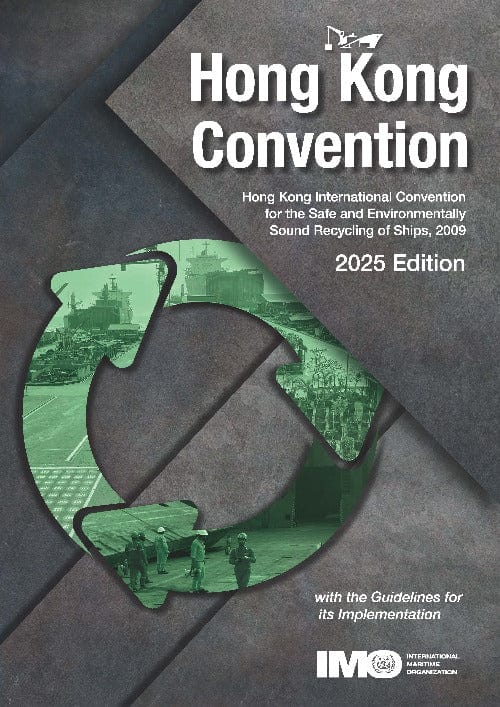
Hong Kong International Convention, 2025 Edition
The Hong Kong Convention) is aimed at ensuring that ships, when being recycled after reaching the end of their operational lives, do not pose any unnecessary risk to human health and safety or to the environment.
The Hong Kong Convention was adopted at a Diplomatic Conference held in Hong Kong, China, in May 2009 and was developed with input from IMO Member States and non governmental organizations, and in co-operation with the International Labour Organization and the Parties to the Basel Convention on the Control of Transboundary Movements of Hazardous Wastes and their Disposal. It intends to address all the issues around ship recycling, including the fact that ships sold for scrapping may contain environmentally hazardous substances such as asbestos, heavy metals, hydrocarbons, ozone depleting substances and others. It will address concerns about working and environmental conditions in many of the world's ship recycling facilities.
The Hong Kong Convention was adopted at a Diplomatic Conference held in Hong Kong, China, in May 2009 and was developed with input from IMO Member States and non governmental organizations, and in co-operation with the International Labour Organization and the Parties to the Basel Convention on the Control of Transboundary Movements of Hazardous Wastes and their Disposal. It intends to address all the issues around ship recycling, including the fact that ships sold for scrapping may contain environmentally hazardous substances such as asbestos, heavy metals, hydrocarbons, ozone depleting substances and others. It will address concerns about working and environmental conditions in many of the world's ship recycling facilities.
Regulations in the new Convention cover: the design, construction, operation and preparation of ships so as to facilitate safe and environmentally sound recycling, without compromising the safety and operational efficiency of ships; the operation of ship recycling facilities in a safe and environmentally sound manner; and the establishment of an appropriate enforcement mechanism for ship recycling, incorporating certification and reporting requirements.
Ships to be sent for recycling will be required to carry an inventory of hazardous materials, which will be specific to each ship. An appendix to the Convention provides a list of hazardous materials, the installation or use of which is prohibited or restricted in shipyards, ship repair yards, and ships of Parties to the Convention. Ships will be required to have an initial survey to verify the inventory of hazardous materials, renewal surveys during the life of the ship, and a final survey prior to recycling.
Ship recycling yards will be required to provide a Ship Recycling Plan, to specify the manner in which each individual ship will be recycled, depending on its particulars and its inventory. Parties will be required to take effective measures to ensure that ship recycling facilities under their jurisdiction comply with the Convention.
A series of guidelines are being finalized to assist in the Convention's implementation.
Ships to be sent for recycling will be required to carry an inventory of hazardous materials, which will be specific to each ship. An appendix to the Convention provides a list of hazardous materials, the installation or use of which is prohibited or restricted in shipyards, ship repair yards, and ships of Parties to the Convention. Ships will be required to have an initial survey to verify the inventory of hazardous materials, renewal surveys during the life of the ship, and a final survey prior to recycling.
Ship recycling yards will be required to provide a Ship Recycling Plan, to specify the manner in which each individual ship will be recycled, depending on its particulars and its inventory. Parties will be required to take effective measures to ensure that ship recycling facilities under their jurisdiction comply with the Convention.
A series of guidelines are being finalized to assist in the Convention's implementation.
The Hong Kong Convention) is aimed at ensuring that ships, when being recycled after reaching the end of their operational lives, do not pose any unnecessary risk to human health and safety or to the environment.
The Hong Kong Convention was adopted at a Diplomatic Conference held in Hong Kong, China, in May 2009 and was developed with input from IMO Member States and non governmental organizations, and in co-operation with the International Labour Organization and the Parties to the Basel Convention on the Control of Transboundary Movements of Hazardous Wastes and their Disposal. It intends to address all the issues around ship recycling, including the fact that ships sold for scrapping may contain environmentally hazardous substances such as asbestos, heavy metals, hydrocarbons, ozone depleting substances and others. It will address concerns about working and environmental conditions in many of the world's ship recycling facilities.
The Hong Kong Convention was adopted at a Diplomatic Conference held in Hong Kong, China, in May 2009 and was developed with input from IMO Member States and non governmental organizations, and in co-operation with the International Labour Organization and the Parties to the Basel Convention on the Control of Transboundary Movements of Hazardous Wastes and their Disposal. It intends to address all the issues around ship recycling, including the fact that ships sold for scrapping may contain environmentally hazardous substances such as asbestos, heavy metals, hydrocarbons, ozone depleting substances and others. It will address concerns about working and environmental conditions in many of the world's ship recycling facilities.
Regulations in the new Convention cover: the design, construction, operation and preparation of ships so as to facilitate safe and environmentally sound recycling, without compromising the safety and operational efficiency of ships; the operation of ship recycling facilities in a safe and environmentally sound manner; and the establishment of an appropriate enforcement mechanism for ship recycling, incorporating certification and reporting requirements.
Ships to be sent for recycling will be required to carry an inventory of hazardous materials, which will be specific to each ship. An appendix to the Convention provides a list of hazardous materials, the installation or use of which is prohibited or restricted in shipyards, ship repair yards, and ships of Parties to the Convention. Ships will be required to have an initial survey to verify the inventory of hazardous materials, renewal surveys during the life of the ship, and a final survey prior to recycling.
Ship recycling yards will be required to provide a Ship Recycling Plan, to specify the manner in which each individual ship will be recycled, depending on its particulars and its inventory. Parties will be required to take effective measures to ensure that ship recycling facilities under their jurisdiction comply with the Convention.
A series of guidelines are being finalized to assist in the Convention's implementation.
Ships to be sent for recycling will be required to carry an inventory of hazardous materials, which will be specific to each ship. An appendix to the Convention provides a list of hazardous materials, the installation or use of which is prohibited or restricted in shipyards, ship repair yards, and ships of Parties to the Convention. Ships will be required to have an initial survey to verify the inventory of hazardous materials, renewal surveys during the life of the ship, and a final survey prior to recycling.
Ship recycling yards will be required to provide a Ship Recycling Plan, to specify the manner in which each individual ship will be recycled, depending on its particulars and its inventory. Parties will be required to take effective measures to ensure that ship recycling facilities under their jurisdiction comply with the Convention.
A series of guidelines are being finalized to assist in the Convention's implementation.
Choisir Language
Choisir Format
À partir de $16.79
Original : $55.95
-70%Hong Kong International Convention, 2025 Edition—
$55.95
$16.79Description
The Hong Kong Convention) is aimed at ensuring that ships, when being recycled after reaching the end of their operational lives, do not pose any unnecessary risk to human health and safety or to the environment.
The Hong Kong Convention was adopted at a Diplomatic Conference held in Hong Kong, China, in May 2009 and was developed with input from IMO Member States and non governmental organizations, and in co-operation with the International Labour Organization and the Parties to the Basel Convention on the Control of Transboundary Movements of Hazardous Wastes and their Disposal. It intends to address all the issues around ship recycling, including the fact that ships sold for scrapping may contain environmentally hazardous substances such as asbestos, heavy metals, hydrocarbons, ozone depleting substances and others. It will address concerns about working and environmental conditions in many of the world's ship recycling facilities.
The Hong Kong Convention was adopted at a Diplomatic Conference held in Hong Kong, China, in May 2009 and was developed with input from IMO Member States and non governmental organizations, and in co-operation with the International Labour Organization and the Parties to the Basel Convention on the Control of Transboundary Movements of Hazardous Wastes and their Disposal. It intends to address all the issues around ship recycling, including the fact that ships sold for scrapping may contain environmentally hazardous substances such as asbestos, heavy metals, hydrocarbons, ozone depleting substances and others. It will address concerns about working and environmental conditions in many of the world's ship recycling facilities.
Regulations in the new Convention cover: the design, construction, operation and preparation of ships so as to facilitate safe and environmentally sound recycling, without compromising the safety and operational efficiency of ships; the operation of ship recycling facilities in a safe and environmentally sound manner; and the establishment of an appropriate enforcement mechanism for ship recycling, incorporating certification and reporting requirements.
Ships to be sent for recycling will be required to carry an inventory of hazardous materials, which will be specific to each ship. An appendix to the Convention provides a list of hazardous materials, the installation or use of which is prohibited or restricted in shipyards, ship repair yards, and ships of Parties to the Convention. Ships will be required to have an initial survey to verify the inventory of hazardous materials, renewal surveys during the life of the ship, and a final survey prior to recycling.
Ship recycling yards will be required to provide a Ship Recycling Plan, to specify the manner in which each individual ship will be recycled, depending on its particulars and its inventory. Parties will be required to take effective measures to ensure that ship recycling facilities under their jurisdiction comply with the Convention.
A series of guidelines are being finalized to assist in the Convention's implementation.
Ships to be sent for recycling will be required to carry an inventory of hazardous materials, which will be specific to each ship. An appendix to the Convention provides a list of hazardous materials, the installation or use of which is prohibited or restricted in shipyards, ship repair yards, and ships of Parties to the Convention. Ships will be required to have an initial survey to verify the inventory of hazardous materials, renewal surveys during the life of the ship, and a final survey prior to recycling.
Ship recycling yards will be required to provide a Ship Recycling Plan, to specify the manner in which each individual ship will be recycled, depending on its particulars and its inventory. Parties will be required to take effective measures to ensure that ship recycling facilities under their jurisdiction comply with the Convention.
A series of guidelines are being finalized to assist in the Convention's implementation.